AI Workflows for Small Business Owners: Practical Ideas, Benefits and Real Examples
Artificial intelligence is no longer a tool reserved for large corporations with huge budgets and specialist teams. For small business owners, AI has become a practical way to save time, reduce repetitive work, improve customer service and make better decisions without hiring extra staff for every task.
The real value of AI is not in using it once for a random prompt. It comes from building simple, repeatable workflows that help run daily operations more efficiently. An AI workflow is a structured process where artificial intelligence supports one or more parts of a business task from start to finish.
For a small business, that could mean handling enquiries, drafting marketing content, organising leads, summarising invoices, planning stock or responding to customers more professionally. In this article, we explain what AI workflows are, why they matter for small businesses and how owners can use them in practical ways.
What Is an AI Workflow?
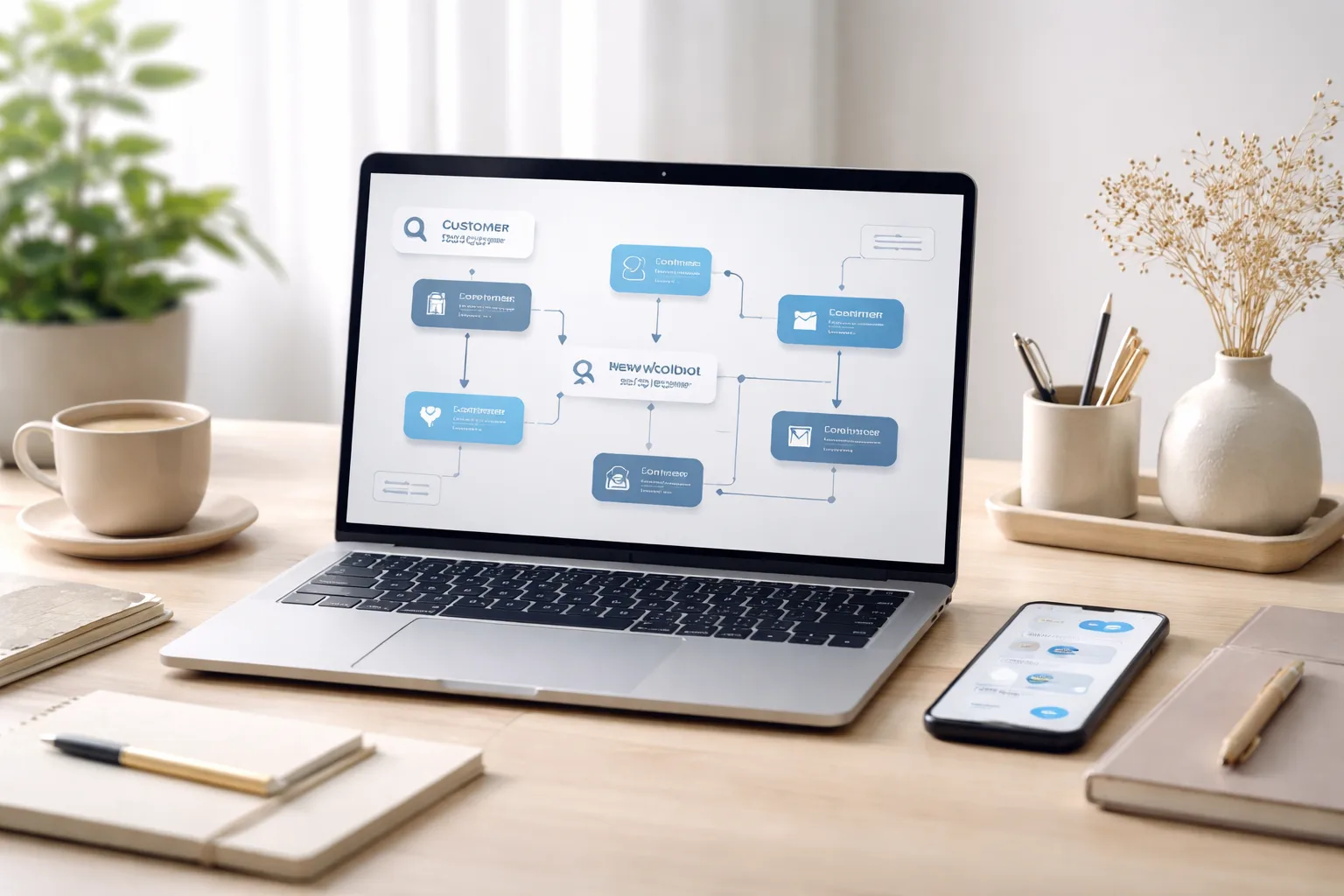
An AI workflow is a step-by-step business process where artificial intelligence is used to complete, speed up or improve specific tasks. Instead of treating AI as a novelty, the business integrates it into a repeatable system.
For example, imagine a small catering business receiving customer requests through WhatsApp, email and Facebook. Normally, the owner would read each message, understand the request, prepare a reply, estimate pricing and note the lead in a notebook or spreadsheet. With an AI workflow, those steps can be partly automated and made more efficient.
- A customer enquiry arrives.
- AI extracts key details such as date, number of guests and service required.
- AI drafts a professional reply.
- The enquiry is logged into a spreadsheet or CRM.
- The owner reviews the response and sends the final version.
That is a simple but effective AI workflow. It does not replace the business owner. It reduces friction and frees up time for higher-value work.
Why AI Workflows Matter for Small Business Owners
Small business owners often handle several roles at once. They may be managing sales, customer service, marketing, administration and operations all in the same day. This is where AI workflows can offer a real advantage.
1. They Save Time
Many daily business tasks are repetitive. These include answering common questions, writing captions, drafting emails, preparing quotations and organising notes. AI can produce a strong first draft or first pass in seconds.
2. They Improve Consistency
When the owner is overloaded, communication quality often drops. Replies may become rushed, content may become irregular and follow-ups may be forgotten. AI workflows help maintain a more consistent standard.
3. They Help Reduce Costs
Not every small business can afford to hire separate people for content, support and admin. AI can support these areas without the immediate cost of expanding staff.
4. They Support Faster Decisions
AI can summarise reports, highlight patterns and explain information in plain language. This can help owners make quicker decisions about sales, marketing and operations.
5. They Improve Customer Experience
Customers value quick replies, clear communication and an organised process. AI workflows can help businesses appear more responsive, polished and professional.
Best Areas to Use AI in a Small Business
The most useful AI workflows usually begin in areas where work is repetitive, time-sensitive and based on predictable patterns.
Customer Enquiries and Lead Management
Many businesses receive the same questions again and again, such as:
- What are your prices?
- Do you deliver?
- Are you available on this date?
- What packages do you offer?
- Where are you located?
AI can classify incoming messages, identify the customer’s intent and draft a tailored response. It can also collect missing information such as budget, dates or quantities.
Example: A small interior design company receives enquiries through its website. AI reads each message and categorises it into residential interior design, office renovation or exterior work. It then drafts a professional response and creates a lead summary for the owner.
Content Marketing
Small businesses often know they need content, but struggle to produce it regularly. AI can help generate blog outlines, product descriptions, ad copy, social media captions, email newsletters and campaign ideas.
Example: A skincare brand uses AI to generate three Instagram caption options for a new serum launch, an email campaign draft and a list of blog post ideas related to natural skincare routines.
Quotations and Sales Support
Preparing quotations takes time, especially when the owner must turn unstructured customer messages into clear pricing. AI can help extract requirements, suggest package options and draft proposal text.
Example: A catering business receives an enquiry for a birthday event with 80 guests. AI pulls out the date, guest count, location and service type, then creates a quotation draft with optional extras such as desserts, drinks and serving staff.
Administration and Document Summaries
Administrative tasks can consume a large part of the day. AI can help summarise invoices, receipts, contracts, meeting notes and supplier emails, making it easier to identify the important details quickly.
Example: A renovation business uploads a supplier quotation and asks AI to summarise the total cost, lead time, exclusions and payment terms in plain English.
Customer Service
AI can draft professional and empathetic replies to complaints, delivery issues, product questions or service delays. This helps protect the brand image while saving time.
Example: An online shop receives a complaint about a late delivery. AI drafts a calm and courteous response with an apology, explanation and practical solution.
Finance and Reporting
AI is not a substitute for accounting software or a professional accountant, but it can make financial information easier to understand. It can summarise expenses, identify patterns and explain reports in clearer language.
Example: A small shop exports monthly sales data into a spreadsheet and asks AI to identify the best-selling products, slow-moving items and busiest sales days.
A Practical AI Workflow Example for a Small Business
Let us take a bakery that sells cakes, snacks and catering trays.
Traditional Process
The bakery owner receives orders and enquiries through Facebook Messenger and WhatsApp. For each message, they must:
- Read and understand the enquiry
- Ask follow-up questions
- Calculate pricing
- Reply manually
- Note the order in a diary or spreadsheet
- Remember to follow up later
This process can become messy and time-consuming during busy periods.
AI-Powered Process
Here is a better workflow using AI:
- Customer sends an enquiry: “Hi, I need 100 chicken patties and 2 birthday cakes for 12 April. Can you deliver to Quatre Bornes?”
- AI extracts details: product, quantity, date, location and likely customer intent.
- AI drafts a reply: “Thank you for your enquiry. We can help with 100 chicken patties and 2 birthday cakes for 12 April, subject to availability. Delivery to Quatre Bornes can also be arranged. Please confirm the cake size, flavour and design so we can prepare an accurate quote.”
- AI logs the lead: customer name, requested items, event date, contact source and follow-up status are added to a spreadsheet or CRM.
- Owner reviews and sends: the final message is checked and approved.
- Follow-up reminder: if no reply is received within a set time, AI drafts a polite follow-up message.
This workflow saves time, reduces missed leads and creates a more organised customer experience.
Examples of AI Workflows by Business Type
Retail Shops
A retail business can use AI to write product descriptions, generate seasonal campaign ideas, answer common questions, summarise weekly sales reports and create staff training notes.
Example: A clothing shop uploads product photos and short notes. AI creates professional product descriptions for the website and social media in a consistent tone.
Restaurants and Food Businesses
Food businesses can use AI to draft posts for daily specials, create menu descriptions, respond to booking enquiries, summarise customer feedback and prepare promotional emails.
Example: AI reviews customer feedback and identifies a recurring complaint about delivery speed, while also highlighting positive feedback about signature dishes.
Service Businesses
Salons, repair companies, design studios and consultancies can use AI to qualify leads, draft appointment confirmations, prepare service summaries and write proposals.
Example: A home renovation company uses AI to turn site visit notes into a structured project summary with scope, timeline, materials and estimated pricing.
E-commerce Brands
Online businesses can use AI to write SEO-friendly product descriptions, answer post-purchase questions, create ad copy, suggest email campaigns and identify common return issues.
Example: AI reviews customer service emails and notices repeated confusion around sizing. The brand updates the size guide and reduces return rates.
How to Build Your First AI Workflow
You do not need a complicated system to get started. The best approach is to begin with one task that wastes time on a regular basis.
Step 1: Identify a Repetitive Task
Choose something that happens often, such as replying to enquiries, creating captions, summarising invoices, drafting quotations or following up with leads.
Step 2: Break the Task Into Steps
Write down how the task currently works from beginning to end. This helps you see where AI could fit in naturally.
Step 3: Decide What AI Should Do
AI is particularly useful for extracting information, summarising text, classifying messages, generating drafts and suggesting next actions.
Step 4: Keep Human Review in Place
For most small businesses, the best approach is human-reviewed AI. Let AI do the first draft or first analysis, then check it before sending it to customers or using it in a decision.
Step 5: Create Reusable Prompts
Strong prompts improve consistency and quality. For example:
Read this customer enquiry. Extract the key details such as date, quantity, service requested and location. Then draft a professional and friendly reply in UK English asking only for the missing information needed to prepare a quote.
Write three Instagram captions in a refined, modern brand voice for a premium eco-friendly skincare product launch. Keep each caption under 100 words and maintain a luxury feel.
Step 6: Measure Results
Track simple outcomes such as time saved, improved response speed, increased follow-up rates, better consistency and fewer missed details.
Limitations and Risks of AI Workflows
Although AI offers major benefits, it should be used carefully and with proper judgement.
Inaccurate Output
AI can sometimes sound convincing while still being wrong. It may misunderstand a request, miss context or produce generic content. Human review is essential.
Brand Voice Problems
If prompts are unclear, the tone may feel robotic, too casual or off-brand. Businesses should define tone and style carefully.
Privacy Concerns
Customer data, financial information and confidential business material should not be entered carelessly into external systems. Always understand the privacy policy and data handling rules of any AI tool used.
Too Much Automation
Some interactions still require a personal human touch, especially complaints, sensitive negotiations or high-value client relationships.
Poor Processes Remain Poor
AI works best when it improves a sensible process. If the underlying workflow is disorganised, AI may simply speed up confusion rather than solve it.
Best Practices for Using AI in a Small Business
- Use AI to assist decision-making, not replace business judgement
- Start with one workflow before expanding
- Create reusable prompt templates
- Review all customer-facing content before sending
- Protect sensitive information
- Refine outputs so they match your brand voice
- Focus on practical, repeatable tasks with clear business value
Example Prompt Set for Small Business Owners
Below is a useful mini prompt set for a premium eco-friendly skincare brand, but the structure can be adapted for many businesses.
Customer Enquiry Analysis Prompt
Read this customer message and extract the following: customer intent, product mentioned, concern or question, urgency level and recommended next action.
Customer Reply Prompt
Draft a warm, polished and professional customer response in UK English for a premium eco-friendly skincare brand. The tone should feel refined, calm and trustworthy. Keep it concise but helpful.
Social Media Prompt
Create five Instagram post ideas for a premium eco-friendly skincare brand targeting women aged 25 to 45 who value natural ingredients, minimalist luxury and sustainable beauty.
Review Summary Prompt
Summarise these customer reviews into three strengths, two concerns and two suggested improvements for the brand.
Product Description Prompt
Write a clean and elegant product description in UK English for a premium frosted glass serum bottle made with sustainable ingredients. Focus on hydration, refinement and eco-conscious beauty.
The Future of AI for Small Businesses
AI will increasingly become part of everyday business operations. The companies that gain the most will not always be the ones using the most advanced tools. They will be the ones that build the clearest and most practical workflows.
For small business owners, the important question is not simply “How can I use AI?” but rather “Which repeated business process can AI improve today?” That shift turns AI from a trend into a real business advantage.
Final Thoughts
AI workflows can give small business owners a meaningful edge. They save time, improve consistency, support growth and reduce the pressure of doing everything manually. The most effective workflows are not overly technical. They are simple, repeatable and focused on real business problems.
Start with one daily task that slows you down. Break it into steps. Let AI support the repetitive parts. Review the output, refine the process and expand gradually. For small businesses, AI is most valuable not when it replaces the owner, but when it helps the owner work with more speed, clarity and confidence.

Published by
AgizoAI Editorial Team
AI news, prompt engineering, tool reviews and practical technology coverage from the AgizoAI editorial desk.
Continue reading
Related AI stories
AI workflow ideas for small business owners
Small business owners can use AI workflows to save time, reduce repetitive tasks, improve customer communication, and create more consistent systems across…