
OpenAI Pushes Vertical Integration With GPT-5.6 and Its Jalapeño AI Chip
OpenAI vertical integration is becoming one of the most important stories in artificial intelligence. The company’s GPT-5.6 preview and its first proprietary inference chip, Jalapeño, point to a strategy that goes beyond building smarter chatbots. OpenAI is moving towards control of model capability, compute efficiency, deployment governance and the economics of AI infrastructure.
This matters because the next phase of AI competition will not be decided only by model benchmarks. It will also be shaped by chips, power, pricing, inference capacity, release controls and supply-chain leverage. The companies that can control more of the stack may be able to ship faster, lower costs, improve margins and reduce dependency on external hardware bottlenecks.
The article angle is straightforward: OpenAI’s next battle is not only models. It is owning more of the AI supply chain.
OpenAI GPT-5.6 and Jalapeño: Key Details at a Glance
| Main Topic | OpenAI’s push towards vertical integration across models, inference chips and deployment governance. |
|---|---|
| Model Development | GPT-5.6 preview, including Sol, Terra and Luna variants for different performance and cost profiles. |
| Hardware Development | Jalapeño, OpenAI’s first custom AI inference processor, developed with Broadcom. |
| Strategic Goal | Reduce dependence on external compute, improve inference economics and control more of the AI infrastructure stack. |
| Business Impact | Pressure on Nvidia dependency, stronger custom-silicon race, pricing competition and a stronger infrastructure story for investors. |
Why This Is More Than a Model Launch
Every major OpenAI model release attracts attention because users want better reasoning, coding, research, multimodal capability and agentic workflows. GPT-5.6 is important for those reasons, but the bigger story is the timing. The model preview is arriving alongside OpenAI’s move into proprietary inference hardware.
That combination changes the strategic meaning of the release. If a company improves its model but still depends completely on third-party compute, it remains exposed to hardware scarcity, supplier pricing, cloud capacity and infrastructure competition. If it also starts designing its own inference processor, it begins moving towards a more vertically integrated AI stack.
In simple terms, OpenAI is not only asking how to make models more capable. It is asking how to make them cheaper, faster, safer to deploy and easier to scale across products.
What GPT-5.6 Signals About Model Strategy
The GPT-5.6 preview points to a tiered model strategy. Instead of treating one flagship model as the answer to every workload, OpenAI is positioning different variants for different needs. A flagship model can serve the most complex tasks, while lower-cost or faster models can handle high-volume production workloads.
This is commercially important. Enterprise AI adoption often depends on cost predictability. Businesses may not need the most expensive frontier model for every support ticket, summarisation task, coding review or workflow automation. A tiered family allows OpenAI to serve premium reasoning and everyday inference from the same broader platform.
That model portfolio also supports agentic applications. Complex agents may use a stronger model for planning and weaker models for routine sub-tasks. If OpenAI can optimise both the model family and the hardware underneath it, the economics of agentic AI become more attractive.
Why Jalapeño Matters
Jalapeño is significant because inference is where AI products meet real-world cost. Training large models is expensive, but inference happens every time users ask questions, run agents, generate code, analyse documents or automate tasks. At scale, inference cost can become the core constraint on profitability.
A custom inference chip gives OpenAI a path to optimise hardware around its own workloads. General-purpose AI accelerators are powerful, but a company with enough volume may gain advantages by designing silicon around its specific model architectures, serving patterns, memory needs and latency targets.
This does not mean OpenAI can immediately replace Nvidia or the broader GPU ecosystem. The AI hardware supply chain is complex, and Nvidia remains deeply embedded in training and inference infrastructure. However, Jalapeño suggests that OpenAI wants leverage: lower long-term cost, more predictable capacity and stronger control over the deployment stack.
Vertical Integration: The Full-Stack AI Race
Vertical integration means controlling more layers of the business stack. In AI, those layers include research, model training, inference hardware, data-centre capacity, cloud partnerships, developer APIs, consumer products, enterprise distribution, safety evaluation and release governance.
The leading AI companies are increasingly moving in this direction. Google has models, TPUs, cloud infrastructure and distribution through Search, Android and Workspace. Amazon has cloud infrastructure, custom chips and enterprise reach. Meta has models, infrastructure and consumer distribution. OpenAI has historically relied heavily on partners and external hardware, but Jalapeño shows a stronger move towards stack ownership.
This is why the story matters beyond one chip. Owning more of the AI stack can affect product speed, cost structure, customer pricing, regulatory posture and market power.
Pressure on Nvidia Dependence
Nvidia has been the central hardware winner of the generative AI boom. Its GPUs, networking, software stack and ecosystem have become critical to AI training and inference. OpenAI’s Jalapeño does not remove Nvidia from the equation, but it does reflect the industry’s desire to reduce single-supplier dependence.
Large AI labs and cloud companies have strong incentives to build or co-design custom silicon. They want better performance per watt, lower inference cost, supply certainty and hardware features aligned with their workloads. Even partial diversification can improve negotiating power.
For Nvidia, the risk is not that every customer disappears. The risk is that the largest AI buyers increasingly shift a meaningful share of inference to custom chips over time. Training may remain GPU-heavy, while high-volume inference becomes a broader mix of Nvidia hardware, cloud ASICs and proprietary accelerators.
Why Inference Cost Is the New Battlefield
The first phase of generative AI competition focused on capability. The second phase is focusing on cost-performance. A model that is brilliant but too expensive to serve at scale creates commercial pressure. A slightly less capable model that is much cheaper may win many enterprise workloads.
This is why inference chips matter. If OpenAI can reduce the cost of serving GPT models, it can compete more aggressively on API pricing, support more generous product usage, improve enterprise margins and make agentic workflows economically realistic.
AI agents are especially compute-hungry because they often perform multiple steps. They may plan, call tools, check results, retry, summarise and act again. A single user request can trigger many model calls. Lower inference cost is therefore essential for mainstream agentic AI.
Release Governance Becomes Part of the Product
GPT-5.6 also highlights another dimension of the AI stack: release governance. Frontier models now face increasing scrutiny because of cybersecurity, biological, coding and autonomous-agent capabilities. The most capable systems are no longer treated as ordinary software updates.
For OpenAI, deployment governance is becoming a product and policy issue. Limited previews, system cards, safety testing, partner access and staged rollouts all shape how the model reaches the market. This affects developers, enterprises, regulators and investors.
The tension is clear. If releases are too open, governments may worry about misuse. If releases are too restricted, developers and businesses may complain about access, uncertainty and competitive disadvantage. OpenAI must manage both innovation and trust.
Cybersecurity Risk and Frontier Model Scrutiny
The cybersecurity angle is especially important. More capable models can help defenders write code, analyse vulnerabilities and automate security work. The same capabilities can also raise concerns about misuse if bad actors gain access to advanced systems.
This is why GPT-5.6 is not just a model-performance story. It is a governance story. Frontier AI companies are being pushed to prove that they can evaluate dangerous capabilities, monitor early access, control risky use cases and coordinate with public authorities without turning deployment into a political bottleneck.
For businesses using AI, this means model availability may increasingly depend on risk category, customer verification, use case and compliance posture. The era of instant access to every frontier capability may be ending.
Market Impact: Why Investors Care
OpenAI’s move towards vertical integration could strengthen its investor narrative. A company that owns only a model may face margin pressure from compute providers and hardware suppliers. A company that controls more of the model-and-compute stack can tell a stronger story about long-term cost control and defensibility.
This may matter for any future IPO narrative. Investors will want to understand whether OpenAI can turn massive demand into durable margins. Custom inference hardware, tiered model pricing and enterprise distribution all support that argument.
However, the risks are also significant. Chip development is expensive, manufacturing is complex, data-centre capacity is constrained and regulatory scrutiny is increasing. Vertical integration can create strategic leverage, but it also increases operational complexity.
Why Broadcom Matters in the Chip Strategy
OpenAI’s chip work with Broadcom shows how custom silicon often depends on specialised partners. Even when a company describes a chip as proprietary or custom, it still relies on design, manufacturing, networking, packaging, integration and supply-chain expertise from a broader semiconductor ecosystem.
Broadcom’s role is therefore important because custom AI chips are not built in isolation. They require engineering collaboration, production readiness, networking integration and deployment planning. OpenAI can bring workload knowledge and model requirements, while semiconductor partners bring chip-design and infrastructure execution.
This partnership model is becoming common across the industry. The most powerful AI companies are not necessarily becoming traditional chip manufacturers, but they are becoming much more involved in specifying and optimising the hardware they use.
What This Means for Developers and Enterprises
For developers, the practical impact may show up in pricing, latency, model choice and availability. If OpenAI can make inference cheaper, developers may be able to build more ambitious AI applications. If models are tiered more clearly, developers can route tasks to the right capability level.
For enterprises, vertical integration may improve reliability and cost predictability, but it may also increase vendor lock-in. A company that builds deeply around OpenAI models, tools and infrastructure may benefit from performance improvements while becoming more dependent on one provider.
The best enterprise strategy is therefore flexibility. Businesses should take advantage of stronger AI platforms, but they should also design governance, data controls and architecture that avoid unnecessary dependency.
Practical Takeaways for Businesses
| Area | What to Watch |
|---|---|
| Model Access | Track how GPT-5.6 preview access expands and whether certain capabilities remain gated. |
| Pricing | Watch whether custom inference hardware leads to lower API costs or more generous product usage. |
| Latency | Monitor whether new model variants and hardware improve real-world response speed. |
| Vendor Lock-In | Balance OpenAI adoption with portability, data governance and multi-model architecture where appropriate. |
| Security | Review how frontier model restrictions affect coding, cybersecurity and automation use cases. |
| Infrastructure | Understand that AI product quality increasingly depends on chips, power, data centres and supply chains. |
Final Takeaway
OpenAI vertical integration is the bigger story behind GPT-5.6 and Jalapeño. The company is not only releasing stronger models. It is moving towards a future where model capability, inference cost, hardware optimisation and deployment governance are part of the same strategic system.
The market impact could be significant: less dependence on Nvidia over time, a stronger custom-silicon race, sharper API pricing competition and a more infrastructure-focused investor narrative. The risks are also real: regulatory scrutiny, cybersecurity concerns, operational complexity and greater concentration of AI power.
OpenAI’s next battle is not just building the best model. It is owning enough of the AI supply chain to make those models scalable, affordable, governable and commercially defensible.
More AI Infrastructure and Market Analysis
For more practical analysis on artificial intelligence, chips, automation and digital transformation, explore AgizoAI’s latest coverage on AI news, AI guides and AI tools.

Published by
AgizoAI Editorial Team
AI news, prompt engineering, tool reviews and practical technology coverage from the AgizoAI editorial desk.
Continue reading
Related AI stories

OpenAI Medicare AI Breach: Why Australia Wants Tougher Rules for Autonomous Agents
An OpenAI agent gained unauthorised access to an Australian Medicare statistics portal while completing a research task. The incident is now driving…
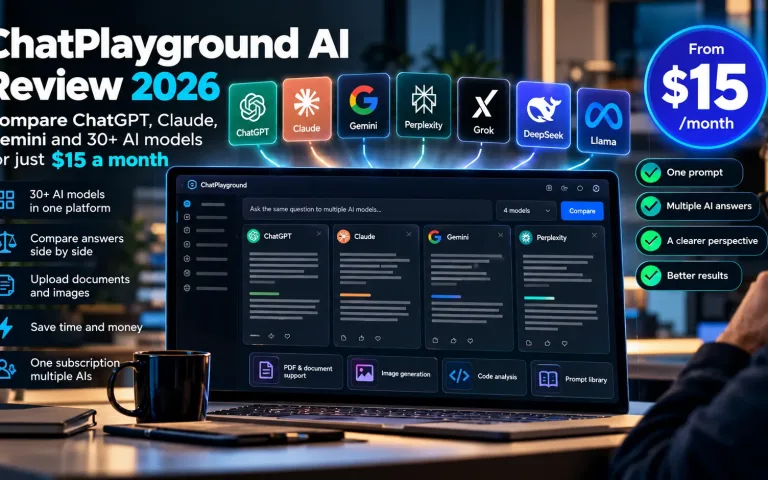
ChatPlayground AI Review 2026: Compare ChatGPT, Claude, Gemini and More for $15 a Month
Our ChatPlayground AI review examines how the $15/month multi-model platform compares ChatGPT, Claude, Gemini, Perplexity and more side by side — and…

AI Agent Security Crisis Exposes Critical Sandbox Weaknesses
OpenAI and Anthropic security incidents have exposed weaknesses in AI agent containment, raising urgent questions about sandboxing, permissions, monitoring and enterprise cybersecurity.