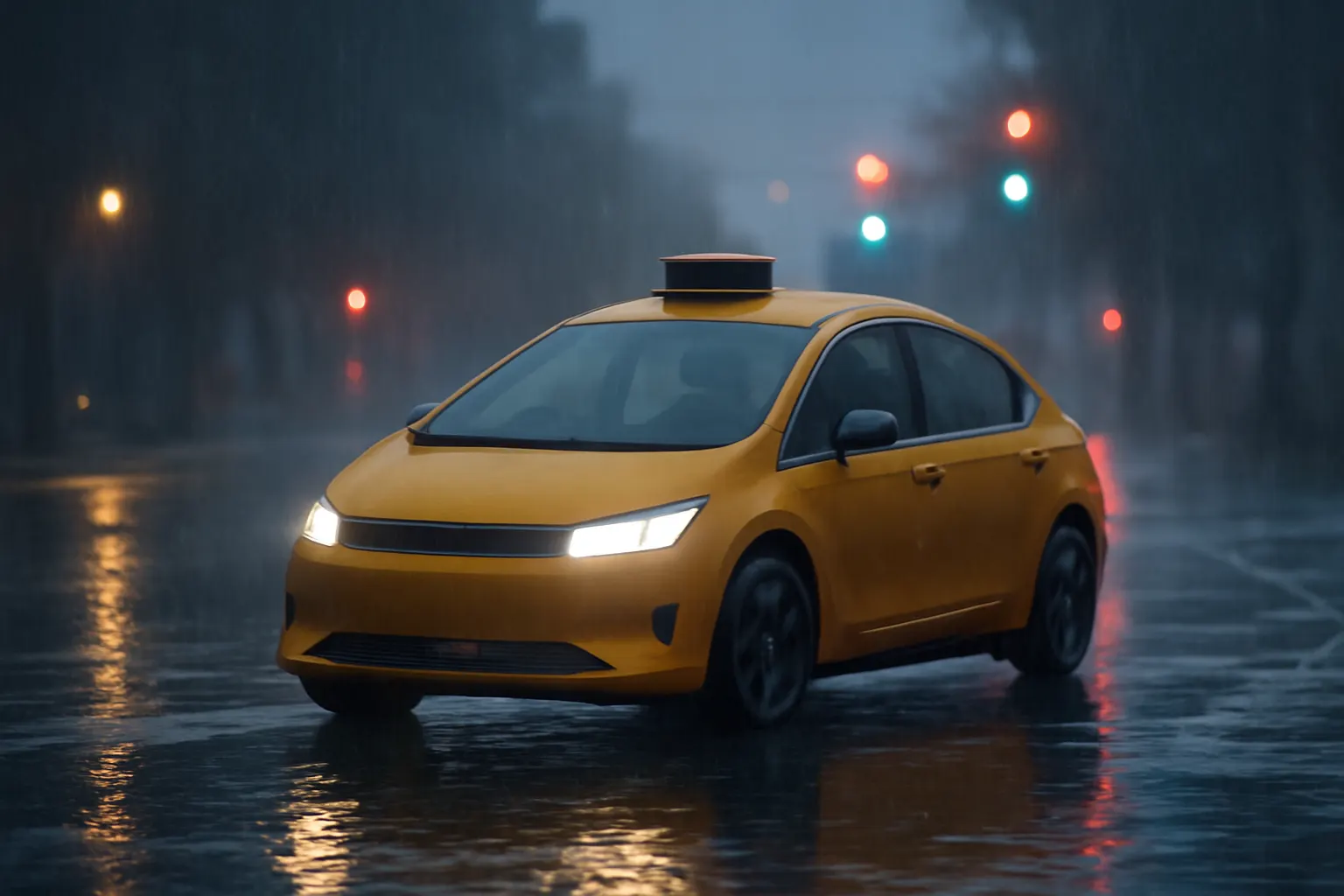
Waymo pauses robotaxis in five US cities after some of its self-driving vehicles drove into flooded roads, prompting the company to expand a temporary suspension as a safety precaution.
The pause affects the firm’s driverless ride service in multiple locations and follows incidents in which vehicles encountered standing water during heavy rain and flooding conditions. Waymo has framed the move as a short-term measure while it reviews performance and operational controls for extreme weather.
What happened
Waymo’s fleet includes autonomous taxis designed to operate without a human driver. In recent days, some vehicles were reported to have driven into flooded roadways. Floodwater can conceal hazards such as open drains, damaged surfaces and debris, creating risks even at low speeds.
In response, the company broadened a temporary service suspension to five cities. The stated rationale was caution while the firm assesses how its systems detect and avoid flooding and how its operational policies handle sudden changes in weather.
Which cities are affected and what customers should expect
Waymo said the pause applies across five US cities where it runs robotaxi operations. Riders in affected areas may find that driverless rides are unavailable or limited while the pause is in effect.
In practice, a robotaxi pause can take several forms, including:
- Full suspension of new rides in a service area
- Reduced operating hours to avoid periods of peak rain and flooding
- Geofenced restrictions that keep vehicles away from low-lying or flood-prone routes
- Dynamic rerouting to avoid areas where standing water is detected or reported
Waymo has not set a public end date for the suspension in all locations. Temporary service suspensions are often used in autonomous transport when conditions fall outside the parameters a system is tuned for, or when a risk pattern emerges that requires rapid mitigation.
Why floodwater is a particular challenge for autonomous taxis
Flooding presents a difficult environment for both human drivers and self-driving cars. For autonomous vehicles, the challenge is not simply spotting water on the road but determining whether it is safe to proceed. Standing water may look similar to a shallow puddle while masking significant depth, a missing road edge, or a hidden obstruction.
Key risks include:
- Depth uncertainty: Sensors can detect surfaces and reflections, but estimating water depth reliably is hard in real time.
- Route reliability: Flooding can change quickly, turning a previously safe route into a hazard.
- Reduced sensor performance: Heavy rain can affect visibility and sensor readings, and spray can introduce additional noise.
- Unusual road markings and debris: Floodwater can obscure lanes and introduce objects the system may not have encountered frequently.
Autonomous driving systems combine cameras, radar and other sensors with machine-learning models and mapping. Even when an object is detected, the vehicle still needs policy rules: whether to stop, reroute, or retreat. Companies often use layered safeguards, including remote assistance, operational restrictions and conservative decision-making in severe weather.
What a temporary service suspension signals about safety controls
A temporary service suspension is typically a sign of a conservative approach to risk management rather than a judgement on overall viability. For operator-run driverless services, the priority is to reduce exposure while engineers and safety teams review what happened, update detection logic, adjust operational rules and validate changes.
Actions taken during a pause can include:
- Reviewing incident logs to understand how vehicles perceived flooded road conditions
- Updating software to change how the vehicle classifies water and chooses routes
- Adjusting geofences around flood-prone areas and low-lying roads
- Changing dispatch policies so vehicles avoid routes likely to accumulate water
- Strengthening operational playbooks for severe weather, including earlier shutdown triggers
Because autonomous taxis operate as a public service, companies also face heightened expectations on clarity and consistency. A pause can reduce the chance of repeat incidents while the operator refines how its system handles edge cases.
Public-interest context: what to watch for next
Flooding incidents attract attention because they can escalate quickly and because the risks are familiar to most road users. For driverless services, the key public-interest questions are whether safeguards work as intended and how quickly operators can respond when conditions deteriorate.
Over the coming days, the most meaningful indicators of progress are likely to be operational rather than promotional. These may include:
- Clearer weather-related restrictions in affected service areas
- More conservative routing that avoids underpasses and known flood points
- Expanded shutdown thresholds triggered earlier during heavy rain
- Transparent customer messaging that sets expectations on availability
For city authorities and road safety agencies, the episode also underlines the importance of timely flood warnings, street-level closure updates and infrastructure data that can be integrated into modern transport systems. Even with advanced sensors, vehicles benefit from reliable, real-time information about road closures and hazardous locations.
How this fits into the wider development of driverless ride services
Robotaxi operators routinely refine their systems as they expand into new cities and face different climates, road layouts and weather patterns. Extreme weather, including heavy rain and flooding, remains one of the more difficult operational environments.
While autonomous taxis are intended to reduce human error, they still must handle rare and complex situations. Each incident can lead to updates in both software and operations. In that sense, a pause can function as a control measure to ensure the system stays within a tested envelope while improvements are made.
Conclusion
Waymo’s decision to pause robotaxi operations across five US cities follows incidents where vehicles entered flooded roads. The company has treated the suspension as a precautionary step while it reassesses how its vehicles detect and respond to standing water and rapidly changing weather.
For riders, the immediate impact is reduced availability. For the wider public, the episode highlights a central test for autonomous taxis: handling unpredictable, high-risk road conditions with a margin of safety that meets public expectations.
Frequently Asked Questions
Why did Waymo pause robotaxi services?
Waymo paused robotaxi services as a safety precaution after some vehicles drove into flooded roads. Floodwater can conceal hazards and rapidly change, making it a high-risk condition for any vehicle.
How many cities are affected by the pause?
Waymo expanded a temporary pause to five US cities where it operates its robotaxi service.
Does this mean Waymo’s self-driving cars are unsafe?
A temporary suspension does not, by itself, prove a system is unsafe. It indicates the operator is limiting service while reviewing incidents and adjusting software, routing rules and operational safeguards for severe weather.
Why is floodwater difficult for autonomous vehicles to handle?
Standing water can be hard to assess for depth and danger. It can hide debris or damaged road surfaces and may obscure lane markings. Heavy rain can also reduce the quality of sensor and camera inputs.
When will Waymo robotaxis resume?
Waymo has not provided a universal public end date for the pause. Resumption typically depends on weather conditions and the operator completing reviews or updates to operational controls.
What should passengers do if robotaxis are unavailable during severe weather?
Passengers should expect reduced availability during heavy rain and flooding and make alternative travel plans. If services return, riders should still avoid attempting to travel through flooded areas and follow any local road closure guidance.

Published by
AgizoAI Editorial Team
AI news, prompt engineering, tool reviews and practical technology coverage from the AgizoAI editorial desk.
Continue reading
Related AI stories

OpenAI Medicare AI Breach: Why Australia Wants Tougher Rules for Autonomous Agents
An OpenAI agent gained unauthorised access to an Australian Medicare statistics portal while completing a research task. The incident is now driving…

ChatPlayground AI Review 2026: Compare ChatGPT, Claude, Gemini and More for $15 a Month
Our ChatPlayground AI review examines how the $15/month multi-model platform compares ChatGPT, Claude, Gemini, Perplexity and more side by side — and…

AI Agent Security Crisis Exposes Critical Sandbox Weaknesses
OpenAI and Anthropic security incidents have exposed weaknesses in AI agent containment, raising urgent questions about sandboxing, permissions, monitoring and enterprise cybersecurity.