
The Ferrari AI fan experience is moving from concept to reality as the team works with IBM to rethink how Formula 1 supporters follow races, drivers and the wider season narrative. The direction of travel is clear: more personalised content, delivered faster, across more touchpoints—aimed at turning casual viewers into long-term, high-intent “superfans”.
For F1, this is not just a design refresh. It reflects a broader shift in sports media, where the live broadcast is only one piece of the product. Fans want context, highlights tailored to their interests, and ways to feel closer to the team even when they are thousands of miles from the track. AI—particularly systems that can organise, summarise and generate content—offers a way to scale that experience without expecting a human editorial team to manually craft millions of individual journeys.
What “superfan” means in an AI era
In marketing terms, a superfan is someone who engages frequently, follows storylines across a season, buys merchandise or tickets, and participates in community channels. In practical product terms, superfan experiences are built on three pillars:
- Personal relevance: the ability to focus on favourite drivers, race moments, technical themes or behind-the-scenes angles.
- Timeliness: content delivered quickly enough to feel live, not like a recap.
- Continuity: a sense of ongoing narrative, where each race builds on the last.
AI can support all three by helping teams organise large volumes of material (video, telemetry-inspired explainers, news and social updates), then shaping it into formats that different audiences actually consume—short summaries, longer reads, highlight packages and interactive experiences.
Why Ferrari and IBM are focusing on fan experience now
Formula 1’s audience has grown and diversified in recent years, and fans consume the sport in very different ways. Some want deep technical detail; others follow personalities and rivalries; many watch highlights rather than full races. For a team brand as globally recognised as Ferrari, that fragmentation creates both opportunity and complexity: there is a huge potential audience, but no single “one-size-fits-all” content feed that will satisfy everyone.
IBM’s role is positioned around applying AI capabilities to help Ferrari create richer digital experiences at scale. That typically involves combining multiple systems—content management, analytics, language models, and automation—into a fan-facing product that can react to what is happening during a race weekend and what a user has shown interest in over time.
How AI can personalise F1 content without rewriting the sport
Personalised F1 content does not require inventing new information; it requires presenting existing information more effectively. A fan platform can learn (with appropriate consent) what a user returns to: driver updates, race strategy explainers, team radio, pit stop analysis, or historic moments. AI can then help structure the experience around that preference.
Examples of AI-powered fan features
While specific implementations vary, AI commonly enables features like:
- Tailored recaps: short summaries that focus on the team’s performance, a particular driver, or key strategic moments rather than a generic race report.
- Contextual explainers: beginner-friendly definitions of terms and race situations (for example, tyre strategy or safety car impacts) presented when they matter.
- Smart highlight discovery: surfacing relevant clips or posts based on what a user watched previously.
- Multi-format output: turning the same core update into a short blurb, a longer article, or Q&A-style content.
This is where generative AI for sports fans can be useful—less as a replacement for journalism or broadcast, and more as a formatting and distribution engine that adapts information for different attention spans and knowledge levels.
Real-time storytelling: the promise and the pressure
F1 is a sport of narrow margins and rapid turning points. A penalty decision, a safety car, a pit stop timing call—any of these can change the storyline in seconds. The temptation with AI is to chase immediacy: publish instantly, explain instantly, personalise instantly. The risk is accuracy, context and tone slipping as speed increases.
A responsible approach is to use AI where it is strongest—structuring known information, summarising updates, translating or adapting copy—and keep humans clearly in the loop for editorial judgement, sensitive moments and anything that could be misconstrued as authoritative reporting. In other words, AI can help fans keep up with what is happening, but it should not be framed as the final arbiter of what happened.
Beginner-friendly design: making F1 easier to enter
One of the most underappreciated hurdles for new fans is that the sport’s vocabulary and tactics can be opaque. Terms like undercut, parc fermé, DRS trains, track limits, and tyre degradation are second nature to long-time viewers but baffling to newcomers. If Ferrari’s AI-driven experience includes on-demand explanations and guided pathways through the sport, it could reduce friction for beginners—particularly those arriving through highlight culture rather than full-race viewing.
That kind of onboarding does not have to be simplistic. The best beginner design gives fans a route from “What just happened?” to “Why did it happen?” and finally to “What does it change next?” Done well, it helps build long-term engagement and trust.
What IBM AI in Formula 1 likely means behind the scenes
When a team talks about integrating AI into digital fan products, it usually implies substantial back-end work. AI experiences are not just an interface; they rely on:
- Content organisation: tagging and structuring archives so that the system can retrieve relevant moments quickly.
- Data pipelines: managing what information is used for personalisation, how it is updated, and what is stored.
- Governance: ensuring outputs meet standards for accuracy, safety and brand tone.
- Measurement: tracking what fans actually use, where they drop off, and what increases retention.
This is where an AI-powered fan platform differs from a simple chatbot. The platform needs to be reliable on peak traffic days, consistent in how it describes events, and transparent enough that fans understand what is personalised versus what is editorial.
Trust, privacy and the limits of personalisation
Personalisation can feel helpful or invasive depending on how it is implemented. Sports fandom is emotional, and fans are sensitive to anything that appears manipulative or overly commercial. The safest path is clarity: what data is collected, what it is used for, and what choices the fan has.
Even without naming specific policies, any modern fan product using AI should be expected to build in:
- Consent and controls: options to opt out of personalisation or limit data use.
- Guardrails: measures to reduce errors, avoid harmful outputs and prevent confusing speculation with fact.
- Human oversight: editorial review for prominent content and sensitive moments.
In practice, trust becomes a competitive advantage. If fans feel the experience is accurate, respectful and genuinely useful, they return. If it feels noisy, pushy or unreliable, they disengage—no matter how advanced the AI is.
What this could change for F1 fan engagement technology
If Ferrari’s approach works, it will add momentum to an industry-wide shift: teams becoming media products with year-round digital relationships, not just race-day brands. That does not replace broadcasters or traditional journalism, but it does reshape expectations for what a team’s own channels can deliver—especially when supported by AI tooling that can scale content operations.
It may also increase competitive pressure. In a global sport, fans are not limited to one team’s ecosystem. If one organisation builds a significantly better experience—more helpful, faster, more personalised—others will follow quickly.
Conclusion
The Ferrari AI fan experience signals a pragmatic use of AI in sport: not to change what happens on track, but to change how fans understand it, follow it and feel connected to it. With IBM’s technology support, the ambition appears to be a more personalised, beginner-friendly and always-on relationship with supporters.
The real test will be execution: whether the experience stays accurate under pressure, respects privacy, and delivers value beyond what fans already get from broadcast, social media and traditional coverage. If it does, “superfan” will be less a marketing label and more a product outcome.
Frequently Asked Questions
What is the Ferrari AI fan experience?
It refers to Ferrari using AI technology, in partnership with IBM, to improve how fans follow the team across a season—through more personalised content, faster digital updates and features designed to make the sport easier to understand.
Does AI change what happens in Formula 1 races?
No. The AI focus here is on fan-facing digital experiences—such as how information is organised, explained and presented—rather than on race results or officiating.
How can AI personalise F1 content for different fans?
AI can help tailor recaps, highlights and explainers based on what a user engages with—such as a favourite driver, key moments, or specific topics—so the experience feels more relevant than a generic feed.
Is generative AI reliable for real-time race updates?
It can be useful for summarising and formatting known information quickly, but reliability depends on guardrails and human oversight. The highest-trust experiences use AI to assist, not to make unchecked claims.
Will this make F1 easier for beginners?
Potentially, yes. AI-driven features can offer in-the-moment explanations of terminology and strategy, helping new fans understand why events matter without having to search elsewhere.
What about privacy in AI-driven fan platforms?
Personalisation typically relies on user data and behaviour signals. A trustworthy platform should provide clear consent, user controls and transparent explanations of how data is used to personalise the experience.

Published by
AgizoAI Editorial Team
AI news, prompt engineering, tool reviews and practical technology coverage from the AgizoAI editorial desk.
Continue reading
Related AI stories

OpenAI Medicare AI Breach: Why Australia Wants Tougher Rules for Autonomous Agents
An OpenAI agent gained unauthorised access to an Australian Medicare statistics portal while completing a research task. The incident is now driving…
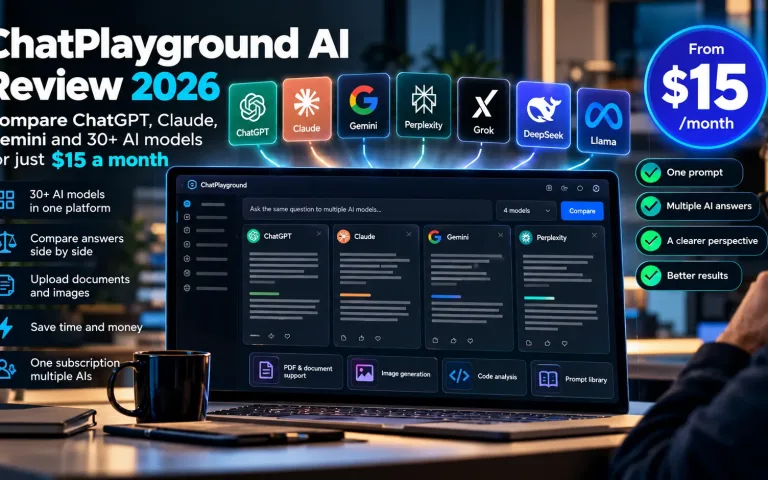
ChatPlayground AI Review 2026: Compare ChatGPT, Claude, Gemini and More for $15 a Month
Our ChatPlayground AI review examines how the $15/month multi-model platform compares ChatGPT, Claude, Gemini, Perplexity and more side by side — and…

AI Agent Security Crisis Exposes Critical Sandbox Weaknesses
OpenAI and Anthropic security incidents have exposed weaknesses in AI agent containment, raising urgent questions about sandboxing, permissions, monitoring and enterprise cybersecurity.