
How to Write a Perfect AI Prompt for Luxury Perfume Advertising Images
Creating a premium perfume ad with AI is not just about describing a bottle and adding a splash effect. The difference between an average result and a campaign-level visual often comes down to how well the prompt controls composition, lighting, textures, mood, and product focus. Here is how to write a stronger AI image prompt for luxury perfume advertising, with a coffee-themed example built for high-end commercial output.
Perfume advertising is one of the most demanding product-photography styles to recreate with AI. Glass reflections, liquid splashes, droplets, labels, lighting, and studio atmosphere all have to work together. If the prompt is too short, the image often looks generic. If it is too messy, the generator can lose focus and produce distorted bottles, poor text, or unrealistic liquid physics.
A better approach is to structure the prompt like an art director. You define the hero product, the visual environment, the supporting elements, the type of lighting, the camera look, and the quality standard. This article shows how to do exactly that for a luxury perfume concept featuring a coffee-toned bottle and coffee splash aesthetic.
Why perfume prompts need more detail
- The bottle must remain the clear hero subject.
- Glass needs realistic reflections and refraction.
- Splashes and droplets need believable motion.
- Luxury ads depend heavily on lighting quality.
- Background simplicity is essential for premium results.
- Too much prompt clutter can damage label clarity and product realism.
Start with the hero product
The first job of the prompt is to establish the bottle clearly. In perfume advertising, the bottle is not just another object in the frame. It is the main brand asset. That means the prompt should specify the bottle’s material, colour, finish, label, and position in the composition.
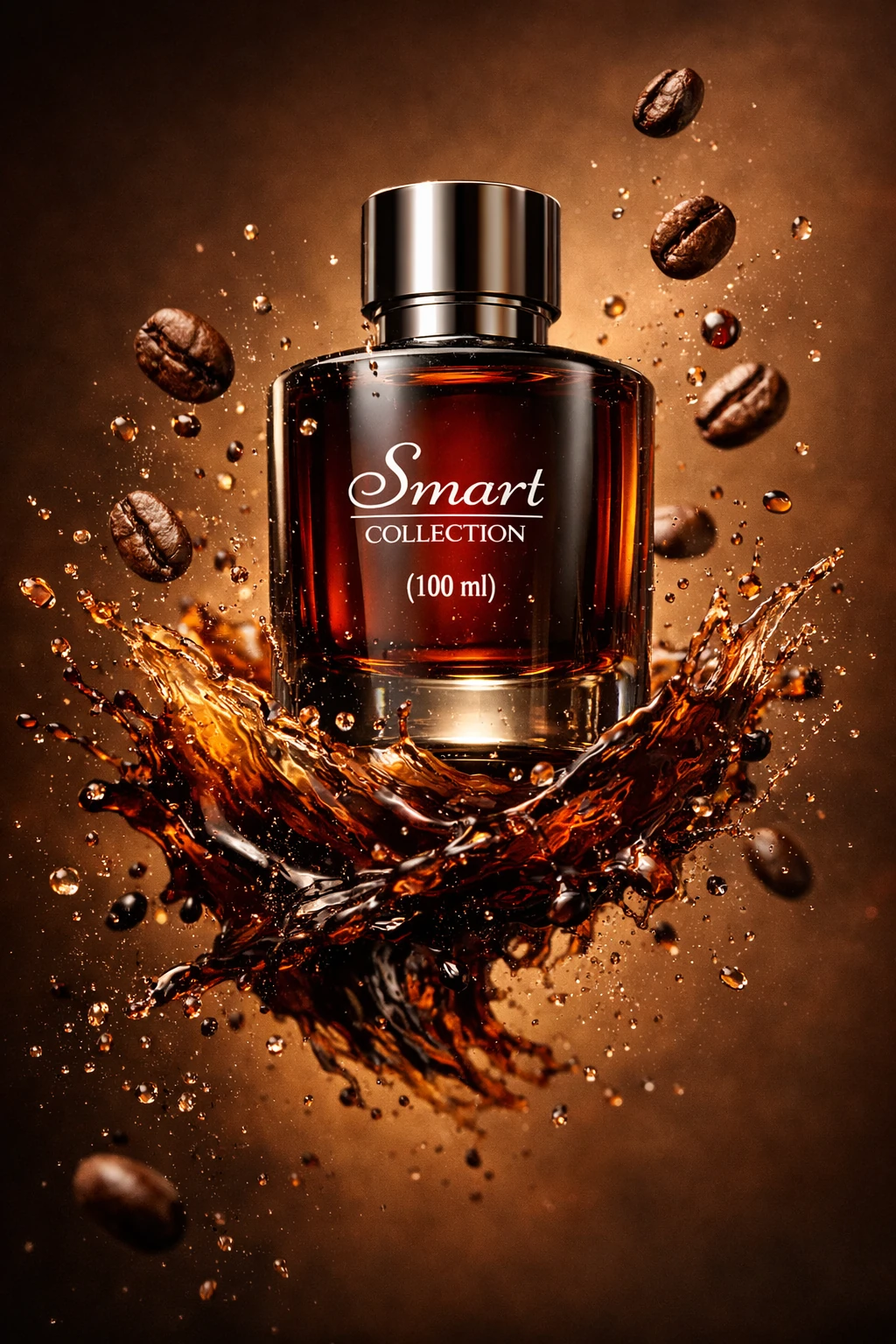
For this concept, the bottle is described as a deep coffee-brown transparent glass perfume bottle labeled “Smart Collection (100 ml)”. That description matters because it controls tone, material, and product identity. Adding words like hero shot, floating elegantly, and perfectly centered helps the AI understand that the bottle should dominate the frame rather than get lost in a busy visual effect.
Build the visual drama around the bottle
A luxury perfume ad needs atmosphere. In this case, the coffee theme is what gives the image identity. The bottle is not sitting on a flat table. It is floating above a dynamic swirling splash of rich coffee liquid. Roasted coffee beans burst around it. Droplets catch the light. This creates motion, richness, and sensory appeal.
Key supporting elements in the prompt
- Swirling splash of dark coffee liquid
- Roasted coffee beans suspended in mid-air
- Tiny droplets and mist reflecting studio light
- Glossy glass surfaces and premium metallic cap
- Elegant negative space to keep the frame luxurious
These details help the generator create a scene that feels closer to a real fragrance campaign instead of a random still life. The product and the theme must work as one visual idea.
Use lighting language like a photographer
Lighting is one of the biggest upgrades you can make to an AI image prompt. A weak lighting description usually gives flat and lifeless output. A strong one can transform the same scene into something far more premium.
In this type of product ad, terms like dramatic studio setup, soft key light, subtle rim light, specular highlights, and glossy reflections matter because they describe the actual visual behaviour expected in luxury commercial photography. The result is more polished, more cinematic, and more believable.
| Prompt element | Why it matters |
|---|---|
| Soft key light | Defines the bottle shape and keeps the product readable |
| Rim light | Separates the bottle from the background |
| Specular highlights | Creates premium glass and liquid reflections |
| Cinematic mood lighting | Makes the image feel like a luxury campaign instead of catalog photography |
Control the background and colour palette
One of the easiest ways to lose the premium look is to let the background become too busy. High-end perfume visuals often use restrained, elegant backdrops that support the product without competing with it. In this coffee concept, a soft brown studio gradient is ideal because it keeps the visual palette cohesive and reinforces the fragrance identity.
Brown, mocha, espresso, and shadow-rich neutrals create warmth and depth. They also make the glass bottle and splash effects feel more grounded. By controlling the background properly, you allow the reflections, droplets, and product edges to stand out more clearly.
The refined AI prompt
Here is a stronger, publication-ready version of the coffee perfume prompt:
Ultra-realistic luxury perfume advertising photography, premium commercial product shot, featuring a deep coffee-brown transparent glass perfume bottle labeled “Smart Collection (100 ml)”, floating elegantly above a dynamic swirling splash of rich coffee liquid. Fresh roasted coffee beans burst mid-air around the bottle, releasing tiny droplets and fine mist that catch and reflect controlled studio lighting. The bottle is the hero subject, perfectly centered, with glossy reflective surfaces, crisp edges, realistic glass refraction, subtle condensation highlights, and premium metallic cap detailing.Background: soft brown studio gradient backdrop with cinematic mood lighting, warm brown and mocha tones blending into darker shadow edges, high-end luxury beauty campaign atmosphere. Lighting: dramatic studio setup with soft key light, subtle rim light, glossy reflections on glass, specular highlights on liquid splash, realistic shadow shaping, polished advertising aesthetic.
Composition: shallow depth of field, macro-inspired product focus, ultra-clean framing, elegant negative space, suspended motion, highly detailed liquid physics, hyper-realistic coffee textures, droplets frozen in motion, commercial fragrance campaign style, premium branding look, luxury cosmetics photography, 8K ultra-detailed, sharp focus on bottle label, photorealistic, high contrast, cinematic, editorial quality.
Avoid: low detail, blurry label, distorted bottle shape, extra objects, text errors, cluttered background, cheap lighting, cartoon look, flat composition, plastic-looking liquid.
Why negative prompts improve the result
In product rendering, negative prompts are often as important as the main prompt. They tell the generator what to avoid. This is especially useful for packaging visuals where errors like warped bottle shapes, blurry labels, duplicate objects, or unrealistic splashes can ruin the image.
Adding exclusions such as blurry label, cheap lighting, cartoon look, and distorted bottle shape gives the prompt more control. It will not guarantee perfection every time, but it significantly improves the chances of getting a cleaner result.
Best aspect ratios for perfume ads
Aspect ratio affects how the image feels and where it can be used. For product ads, the right frame depends on the intended platform.
- 4:5 for Instagram ads, sponsored posts, and vertical product showcases
- 1:1 for catalogue-style social posts and marketplace use
- 16:9 for website banners, landing pages, and hero sections
- 9:16 for stories, reels covers, and mobile-first ad placements
For a hero visual on a modern product site, 4:5 and 16:9 are usually the strongest options.
How to make the prompt even more premium
Once the base version is working, there are several ways to elevate the concept further. You can introduce gold metallic accents, stronger contrast between highlights and shadows, darker espresso tones, or a more editorial fragrance-campaign mood. You can also add premium styling language like luxury beauty campaign, editorial composition, high-end commercial retouching, or fragrance house aesthetic.
These additions help the AI move away from generic product rendering and closer to the visual language used by top beauty and fragrance brands.
Quick prompt formula for perfume ads
- Describe the bottle clearly.
- Add the thematic liquid or visual effect.
- Define supporting objects like fruit, flowers, spices, or beans.
- Specify studio background and colour palette.
- Describe lighting like a commercial photographer.
- Add composition and camera-quality terms.
- Include negative prompts to reduce common errors.
Final thoughts
A strong AI prompt for perfume advertising should do more than describe the object. It should define a premium visual system. The bottle, splash, lighting, background, and camera language all need to work together. That is what creates the difference between a rough AI render and a luxury-looking commercial image.
For the coffee perfume concept, the combination of deep brown glass, swirling coffee liquid, suspended beans, cinematic studio lighting, and precise product-photography language creates a far stronger foundation. With the right prompt structure, AI can generate visuals that feel more polished, more intentional, and much closer to real fragrance campaign photography.
Editorial note: AI-generated product imagery should always be reviewed carefully for label accuracy, brand consistency, proportions, and realistic material rendering before commercial use.


Published by
AgizoAI Editorial Team
AI news, prompt engineering, tool reviews and practical technology coverage from the AgizoAI editorial desk.
Continue reading
Related AI stories

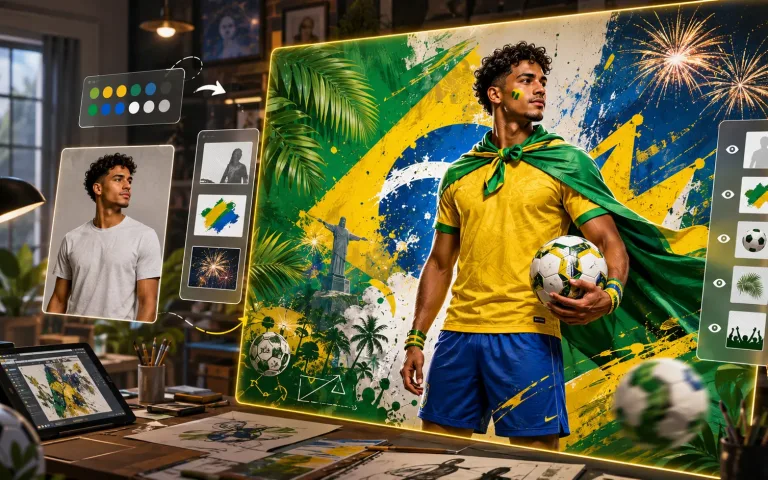
Brazil AI Fan Poster Prompt: How to Turn a Photo Into a Stylish World Cup Supporter Image
This Brazil AI fan poster prompt shows how to transform a person’s photo into a premium World Cup supporter image while preserving…

AI-Generated Influencers: Why Brands Are Turning Synthetic People Into Social Media Sales Tools
Brands are experimenting with AI-generated influencers that mimic real customers, raising urgent questions about transparency, trust and the future of social media…

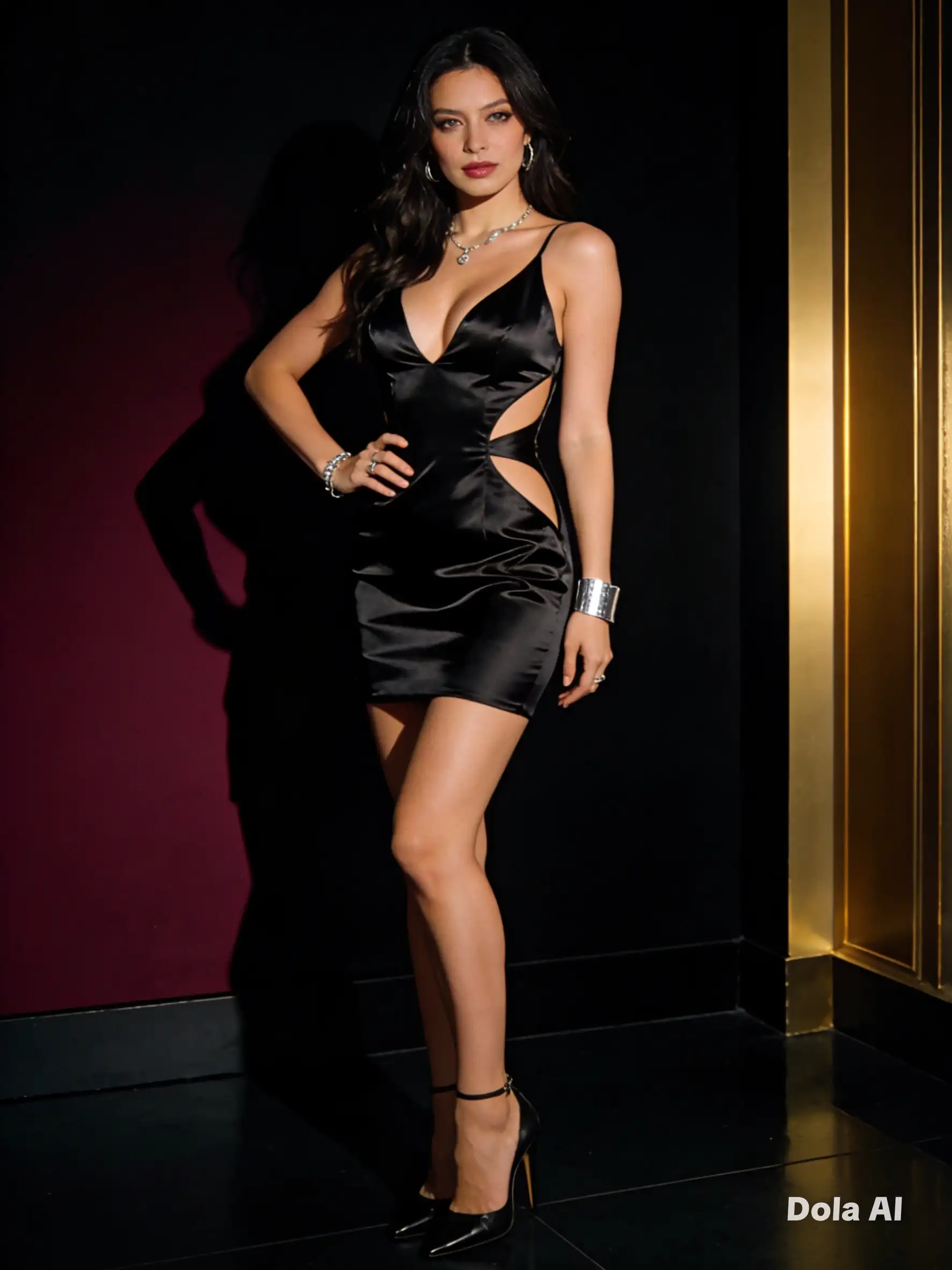
Sexy Fashion Outfit AI Prompt for Dola AI – Glamorous Studio Look
Create a stylish, sexy, and elegant fashion image with this ready-to-use Dora/Dola AI prompt. Perfect for studio photography, fashion editorials, social content,…