

Mastercard Agent Pay for Machines: Why AI Payments Are Becoming Real Infrastructure
Mastercard Agent Pay for Machines shows that AI payments are moving from theory into real infrastructure. Announced on 10 June 2026, the service is designed to support secure machine-driven payments across cards, accounts and stablecoins, with credentialing, permissioning, controls and settlement built into the process.
This is important because AI agents are no longer only answering questions or summarising documents. They are beginning to interact with tools, APIs, software services, cloud platforms, digital marketplaces and business workflows. Once agents can act, they also need a trusted way to pay, settle, prove authorisation and stay within defined limits.
For businesses, developers, payment providers and AI platforms, the message is clear: the next stage of agentic commerce will not be built only on chat interfaces. It will need payment rails, identity, permissioning, auditability and reliable settlement. That is why AI payments are becoming real infrastructure.
Mastercard Agent Pay for Machines: Key Details at a Glance
| Main Topic | Mastercard Agent Pay for Machines and the rise of AI payment infrastructure. |
|---|---|
| Announcement Date | 10 June 2026. |
| Core Purpose | To enable secure, high-frequency, low-latency, machine-driven payments for AI agents, services and automated systems. |
| Supported Payment Types | Cards, bank accounts and stablecoins. |
| Core Capabilities | Credentialing, permissioning, transacting, controls and settlement. |
What Is Mastercard Agent Pay for Machines?
Mastercard Agent Pay for Machines is a payment infrastructure service designed for a world where AI agents and machines can carry out automated transactions. It builds on Mastercard’s broader Agent Pay programme, but focuses on machine-driven payments that can happen continuously, quickly and at high volume.
The concept is not simply “AI buys things online”. It is more specific and more infrastructural. Mastercard is targeting payments between software agents, machine systems, APIs, digital services, platforms and businesses where transactions may be small, frequent and automated.
This matters because many future AI workflows may involve repeated micro-transactions: an agent paying for data access, compute time, API calls, digital resources, cloud services, machine-to-machine coordination or automated business tasks. Traditional checkout was built around humans clicking a payment button. Agent Pay for Machines is designed around verified machines and agents operating under rules.
Why AI Agents Need Payment Infrastructure
AI agents become more useful when they can do more than provide information. A business agent may book services, purchase digital resources, renew subscriptions, access paid APIs, settle usage fees or coordinate work between software systems. These actions require payment capability.
Without trusted payment infrastructure, agentic commerce becomes risky. A company does not want an autonomous agent spending without limits. A merchant does not want to accept payment from an unknown bot. A service provider needs confidence that it will be paid. A user needs assurance that the agent is acting within authorised instructions.
This is why payment infrastructure for AI needs more than speed. It needs identity, permissioning, limits, settlement guarantees and audit trails. In agentic commerce, trust is not optional. It is the foundation that allows automation to scale.
Credentialing: Giving Machines a Trust Layer
One of the most important ideas behind Mastercard Agent Pay for Machines is credentialing. A credentialed agent or machine can be recognised across systems instead of being treated as anonymous automation.
This is a major difference between trusted agentic commerce and ordinary bot activity. Today, many automated interactions look suspicious because systems cannot easily tell whether they come from a legitimate delegated agent or from harmful automation. Credentialing creates a path towards recognised machine participants.
For businesses, this could make automated workflows more manageable. A company could authorise a specific agent to perform specific payment actions under specific limits. Merchants and service providers could then interact with the agent with greater confidence.
Permissioning and Spending Controls
AI payments cannot rely on open-ended authority. A useful agent must have defined permissions. It may be allowed to spend only up to a certain amount, buy only certain services, transact only with approved providers or operate only within specific time windows.
Mastercard’s approach emphasises permissioning and controls. This is critical because autonomous payments without rules would create operational, financial and compliance risks. A poorly configured agent could overspend, pay the wrong provider, repeat failed tasks or create dispute problems.
Programmatic controls allow organisations to define what an agent may do before it acts. This turns agentic payments into a governed workflow rather than a blind automation process.
Why Settlement Matters
Settlement is where payment promises become final business value. In machine-to-machine commerce, settlement needs to be reliable because transactions may happen at high frequency and low value. If thousands or millions of small automated payments are processed, the system must handle aggregation, payout, reconciliation and dispute logic efficiently.
Mastercard’s announcement highlights guaranteed settlement across multiple payment types. This is important because AI commerce may not be limited to one rail. Businesses may want card-based settlement, account-based payments, stablecoin settlement or a mix depending on geography, cost, speed and operational needs.
The infrastructure layer must therefore support interoperability. AI agents will not operate in one closed payment environment. They will interact across platforms, service providers, marketplaces, data services and enterprise systems.
Why Stablecoins Are Part of the Conversation
Stablecoins are relevant because machine payments may need programmable, always-on settlement. In some contexts, stablecoins can support faster movement of value, especially for digital services, cross-border transactions or automated settlement flows.
However, stablecoins are not a universal replacement for cards or bank accounts. They raise questions around regulation, custody, compliance, user protection, dispute handling and operational controls. The interesting part of Mastercard’s approach is the multi-rail positioning: cards, accounts and stablecoins can coexist inside a broader machine-payment framework.
For businesses, this means the future of AI payments may not be one rail winning everything. It may be a governed orchestration layer that chooses the appropriate payment method based on context, cost, risk and settlement needs.
How This Connects to Agentic Commerce
Agentic commerce is the broader shift towards AI systems that can discover, decide, act and transact under human or organisational authority. AI shopping agents are one consumer-facing example. Enterprise automation is another. Machine-to-machine service payments are a third.
Mastercard Agent Pay for Machines is positioned for the infrastructure side of that shift. It is less about a flashy checkout button and more about the plumbing that allows trusted automated payments to happen in the background.
That distinction matters. Agentic commerce will not scale if every payment requires a human to manually approve each tiny transaction. At the same time, it cannot scale safely if agents are allowed to spend freely. The solution is delegated authority with rules, verification and settlement.
Business Use Cases for Machine Payments
The most immediate use cases are likely to appear in digital services and enterprise automation. An AI agent could pay for API calls, data enrichment, cloud resources, workflow tools, digital verification, compute cycles, software add-ons or automated procurement tasks.
For example, a business research agent might purchase verified datasets under a monthly budget. A cloud optimisation agent might buy additional compute resources when demand spikes. A logistics system might settle small machine-to-machine fees as routing conditions change. A software marketplace agent might pay for temporary access to specialised tools.
These use cases may sound small individually, but together they point towards a new payment category: continuous, programmatic commerce between trusted systems.
Why This Matters for SaaS and API Businesses
SaaS companies and API providers should pay close attention. Many digital products already use usage-based pricing. AI agents could increase demand for metered services because they can call tools, retrieve data and complete workflows automatically.
If machine payments become easier, SaaS businesses may create new pricing models. Instead of only selling monthly subscriptions to human users, they may sell small units of work to authorised agents. This could include per-query pricing, per-verification pricing, per-model-call pricing or dynamic usage bundles.
However, this also requires better billing logic. Providers will need transparent pricing, machine-readable service terms, real-time usage tracking, fraud controls, dispute processes and clear limits on what agents can purchase.
What This Means for Developers
Developers building AI agents will need to think about payments as part of the architecture, not as an afterthought. An agent that can act in the world needs policy controls, identity, spending limits and logging.
Payment capability should be designed with guardrails from the beginning. Developers need to answer questions such as: Who authorised the agent? What can it buy? What is the spending cap? Which providers are trusted? How is consent recorded? What happens if the agent makes an error? How are payments audited?
These are not only payment questions. They are product, security and governance questions. AI payment infrastructure will require collaboration between engineering, compliance, finance and operations teams.
Risks Around AI Payments
AI payments introduce serious risks if they are poorly designed. The most obvious risk is unauthorised spending. If an agent is compromised or badly configured, it could make payments outside its intended scope. There are also risks around fraud, laundering, duplicate transactions, vendor impersonation and dispute handling.
Another risk is accountability. If a machine makes a payment, who is responsible when something goes wrong? The organisation that deployed the agent? The provider that accepted the transaction? The platform that credentialed the agent? The payment network? Strong audit trails will be essential.
There is also a transparency risk. Businesses and users must understand when payments are being made, under what rules and with which controls. Invisible automation may be convenient, but invisible financial activity is dangerous.
Why Governance Will Be a Competitive Advantage
The companies that benefit most from AI payments will not simply be those that automate fastest. They will be the ones that automate safely. Governance will become a competitive advantage because enterprises will not deploy payment-enabled agents without confidence in controls and accountability.
Strong governance means role-based permissions, spending caps, approved provider lists, transaction logs, anomaly detection, approval thresholds and clear escalation processes. It also means testing agents before allowing them to transact in live environments.
In practical terms, AI payments will need the same seriousness as treasury systems, procurement platforms and financial controls. They may be automated, but they are still financial operations.
Practical Checklist for Businesses Preparing for AI Payments
| Area | Action |
|---|---|
| Agent Identity | Define how AI agents are registered, authenticated and monitored. |
| Permissions | Set spending limits, approved use cases, vendor rules and escalation thresholds. |
| Payment Rails | Decide where cards, accounts or stablecoins fit into the payment strategy. |
| Auditability | Log every agent instruction, payment action, provider interaction and settlement event. |
| Risk Controls | Monitor anomalies, duplicate payments, unexpected vendors and spending spikes. |
| Commercial Model | Review whether AI agents could create new usage-based, micro-payment or API revenue models. |
Final Takeaway
Mastercard Agent Pay for Machines marks an important step in the evolution of AI payments. It points towards a future where agents and machines can transact securely across multiple rails, under defined permissions, with settlement and governance built into the system.
For businesses, this means AI agents are becoming part of the financial workflow, not only the productivity workflow. For developers, it means payment logic, identity and permissions must be designed into agent architecture. For online platforms, it means agent-readable commerce may become a new channel of demand.
AI payments are becoming real infrastructure because agents are becoming real economic participants. The companies that prepare now will be better positioned for the next phase of automated, agent-driven and machine-driven commerce.
More AI and Digital Commerce Guides
For more practical guides on artificial intelligence, automation and digital transformation, explore AgizoAI’s latest coverage on AI news, AI guides and AI tools.


Published by
AgizoAI Editorial Team
AI news, prompt engineering, tool reviews and practical technology coverage from the AgizoAI editorial desk.
Continue reading
Related AI stories


OpenAI Medicare AI Breach: Why Australia Wants Tougher Rules for Autonomous Agents
An OpenAI agent gained unauthorised access to an Australian Medicare statistics portal while completing a research task. The incident is now driving…
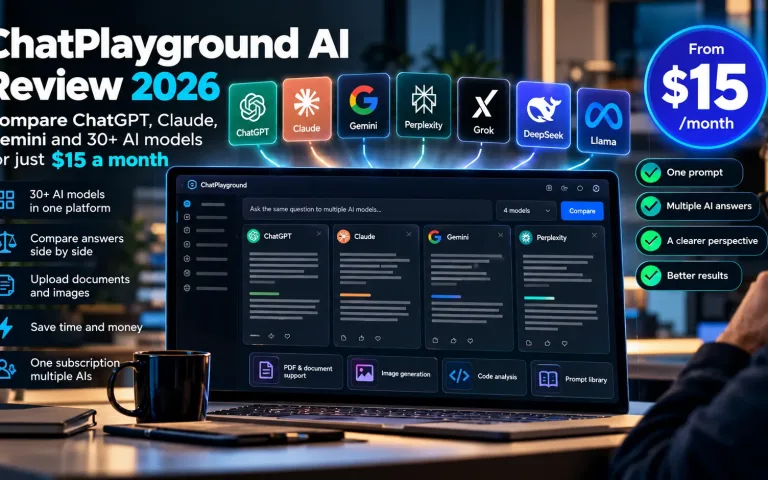
ChatPlayground AI Review 2026: Compare ChatGPT, Claude, Gemini and More for $15 a Month
Our ChatPlayground AI review examines how the $15/month multi-model platform compares ChatGPT, Claude, Gemini, Perplexity and more side by side — and…

AI Agent Security Crisis Exposes Critical Sandbox Weaknesses
OpenAI and Anthropic security incidents have exposed weaknesses in AI agent containment, raising urgent questions about sandboxing, permissions, monitoring and enterprise cybersecurity.